
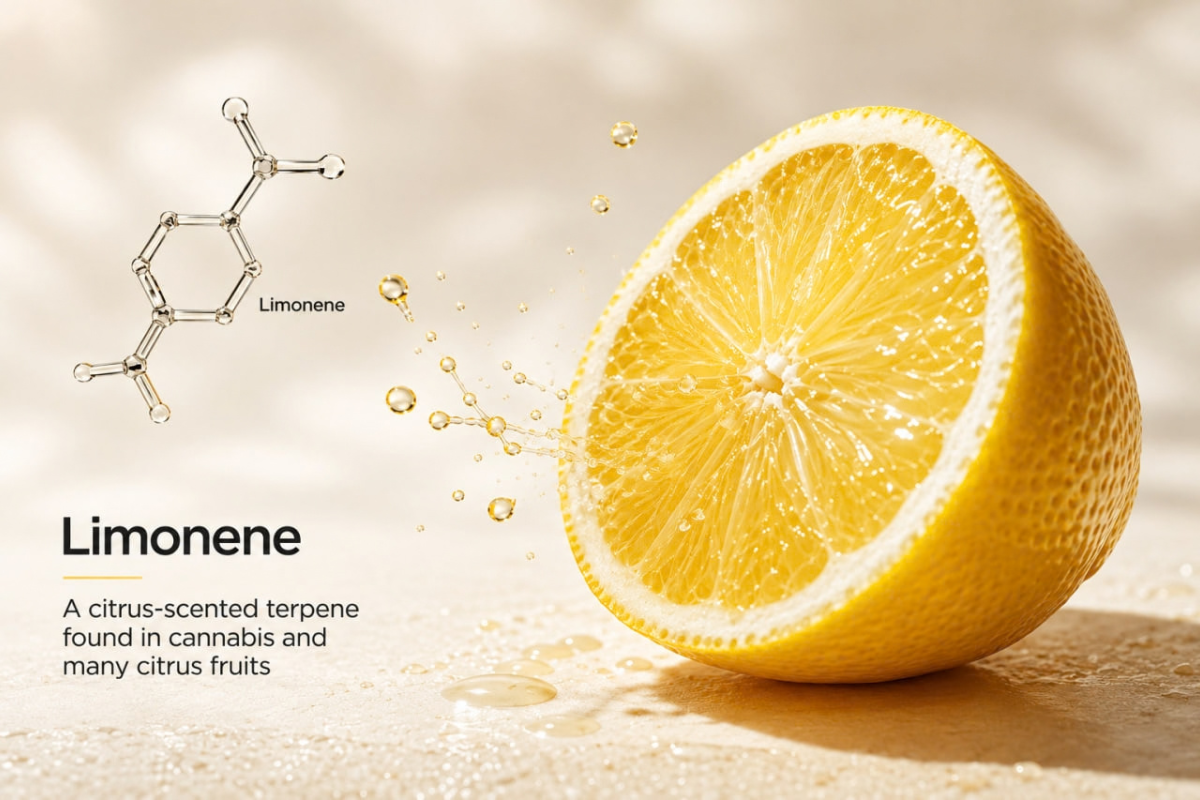
Limonene is one of the most recognizable aromatic compounds found in nature. It is strongly associated with the fresh scent released when an orange, lemon, or lime peel is opened, and it is also present in many cannabis samples.
As interest in cannabis terpenes has grown, limonene has become linked with a range of claims about mood, energy, and stress. The science is more nuanced. Limonene is an important and well studied plant compound, but its presence in a product does not guarantee a particular experience or health effect. Understanding where it comes from and what research actually shows helps put this citrus scented terpene in context.
1. What Is Limonene?
Limonene is a naturally occurring terpene. Terpenes are aromatic compounds produced by many plants, where they contribute to scent, flavor, and chemical communication. Depending on the plant, terpenes may help attract pollinators, deter herbivores, respond to environmental conditions, or participate in interactions with other organisms.
Limonene is a monoterpene, a relatively small and volatile type of terpene. It is best known for its bright, fresh, citrus like aroma and is a major contributor to the familiar scent of many citrus peels and citrus essential oils.
The compound exists in different forms, including D limonene and L limonene. These forms have the same molecular formula but differ in the arrangement of their atoms, which can affect how they interact with scent receptors and other biological systems. D limonene is the form most commonly associated with sweet orange oil and the classic citrus aroma.
Limonene occurs naturally in cannabis, but it is not unique to cannabis. It is found widely in citrus fruits, especially in the peel and essential oils of oranges, lemons, limes, grapefruit, and mandarins. It can also occur in other aromatic plants, herbs, spices, and botanical oils.
Its presence in such a wide variety of plants is important. Limonene is not a cannabis specific compound with a single cannabis specific role. It is part of a much larger group of natural plant chemicals that shape the sensory diversity of foods, flowers, and herbs.
2. Where Is Limonene Found?
Citrus peels are among the richest natural sources of limonene. The compound is concentrated in tiny oil containing structures in the outer layer of the peel. When the peel is squeezed, twisted, or cut, these oils are released into the air and create the familiar citrus fragrance.
Orange, lemon, lime, grapefruit, and mandarin oils can contain substantial amounts of limonene, although each oil has its own broader chemical profile. Other volatile compounds also influence the final aroma, which is why a lemon, orange, and grapefruit do not smell identical even though each may contain limonene.
Limonene is also found in cannabis, where it may contribute citrus, fruit, or fresh aromatic notes. Its concentration can vary substantially among cultivars, individual plants, batches, and samples with the same cultivar name.
Plant genetics are one influence, but they are not the only factor. Growing conditions, temperature, light, nutrients, harvest timing, drying, curing, storage, and processing can all affect a plant’s terpene profile. Because terpenes are volatile, heat, air exposure, and light can also change the amount present over time.
For this reason, smell alone cannot reliably determine a product’s exact limonene concentration. A citrus aroma may reflect limonene, but it may also come from a combination of several terpenes and other volatile compounds. Laboratory testing is the most reliable way to identify and measure limonene in a specific sample.
Beyond plants, limonene is widely used in flavor, fragrance, food, cosmetic, and cleaning product applications. Its pleasant aroma and availability from citrus oils have made it a familiar ingredient in many everyday products.
3. What Does Research Say About Limonene?
Researchers have studied limonene in laboratory experiments, animal models, and a smaller number of human studies. Areas of interest include oxidative processes, inflammatory signaling, metabolism, stress related responses, and cellular communication.
Laboratory studies have shown that limonene can interact with biological pathways involved in these processes. Animal research has also reported effects that have prompted further investigation. However, these findings cannot be assumed to apply directly to humans. Laboratory conditions, doses, routes of administration, and animal biology may differ substantially from real world human use.
Some human research has examined citrus essential oils or citrus fragrances, but these are mixtures containing many compounds, not pure limonene alone. As a result, it is difficult to attribute a reported effect to limonene specifically.
One controlled human laboratory study examined vaporized D limonene with THC in healthy adults who intermittently used cannabis. In that study, D limonene reduced some acute anxiety related effects caused by higher doses of THC, while limonene alone did not produce meaningful differences from placebo on the measured outcomes. This was a specific finding in a small, controlled setting. It does not show that limonene treats anxiety, improves mood, or produces the same effect in all cannabis products or all people.
Research interest in limonene does not establish a therapeutic benefit. It would be inaccurate to say that limonene prevents or treats cancer, inflammation, pain, digestive disorders, anxiety, depression, or any other medical condition. Larger and more diverse human studies are needed to clarify whether particular forms, doses, and methods of exposure have clinically meaningful effects.
The most responsible interpretation is that limonene is biologically active enough to warrant research, but much remains unknown about its practical effects in people.
4. Limonene, Cannabis, and the “Entourage Effect”
Limonene is frequently discussed in cannabis because it can contribute to the aromatic complexity of some cannabis varieties. Its citrus character may stand out in a terpene profile, especially when combined with other compounds that create fruit, floral, herbal, or pine like notes.
It is also commonly mentioned in discussions of the “entourage effect.” This term describes the hypothesis that cannabinoids, terpenes, and other compounds in cannabis may interact in ways that influence the overall effects of the plant or a cannabis product.
The hypothesis is scientifically interesting, but it should not be presented as definitively proven. Some studies suggest that certain interactions may occur under specific conditions, while other laboratory studies have not found direct terpene effects at major cannabinoid receptors. Researchers are still working to understand whether meaningful interactions occur in people, which compounds are involved, and how dose and route of use may affect the outcome.
Limonene should not be treated as a guarantee of improved mood, reduced anxiety, increased energy, or a predictable cannabis experience. It also cannot be assumed to change the psychoactive effects of THC in every product or person.
Cannabis effects depend on more than one terpene. Cannabinoid content, the full terpene profile, dose, route of administration, tolerance, expectations, individual biology, and setting can all influence the experience. Studying limonene is valuable because it reveals more about the chemistry and aromatic diversity of cannabis and the many other plants that produce this familiar citrus scented compound.